
 Michael Zimmerman
The Complete Guide to Multifamily Revenue Management
 Michael Zimmerman : April 27, 2026
Learn multifamily revenue management fundamentals—from rent pricing strategies and demand-based unit pricing to tenant retention and marketing...
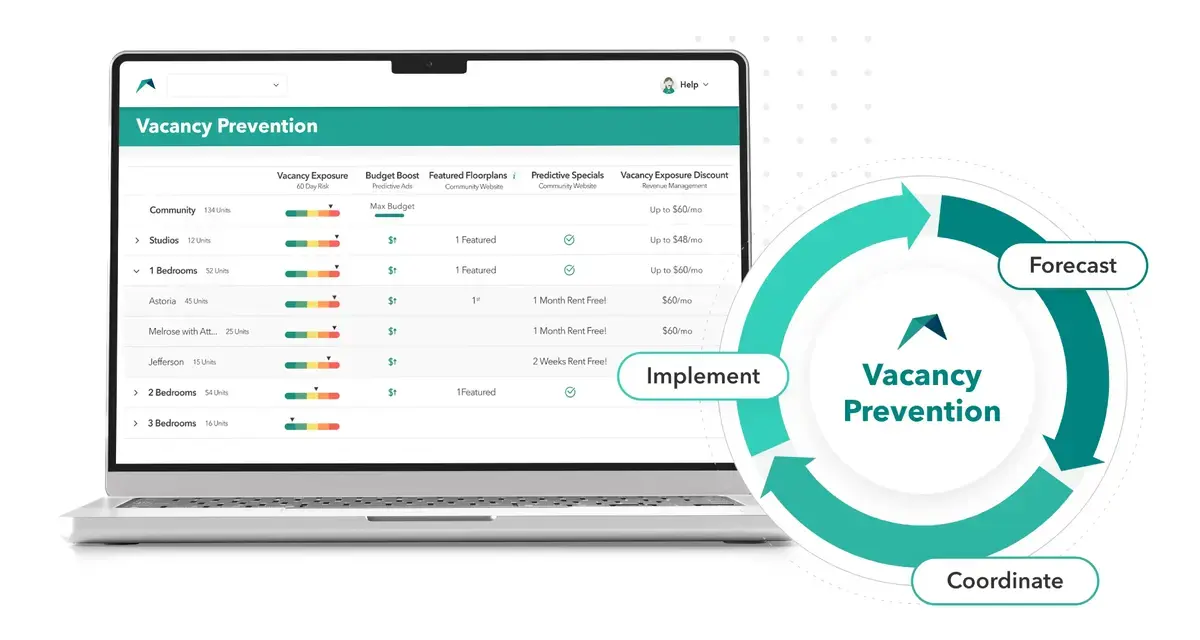
The multifamily industry is stuck in a reactive marketing doom loop.
Instead of taking action in anticipation of vacancies, operators wait until a bad occupancy report comes in to address what was decided weeks ago. Marketing and pricing decisions get made in silos based on different data, and manual adjustments land well after vacancies are a problem.
This is accepted as normal, but it shouldn't be.
That's why RentVision developed Vacancy Prevention Marketing to connect projected availability and leasing velocity with coordinated marketing and revenue management strategies so teams act before vacancies hit.
Vacancy Prevention Marketing is the method. RentVision's Vacancy Prevention System is how we automate it.
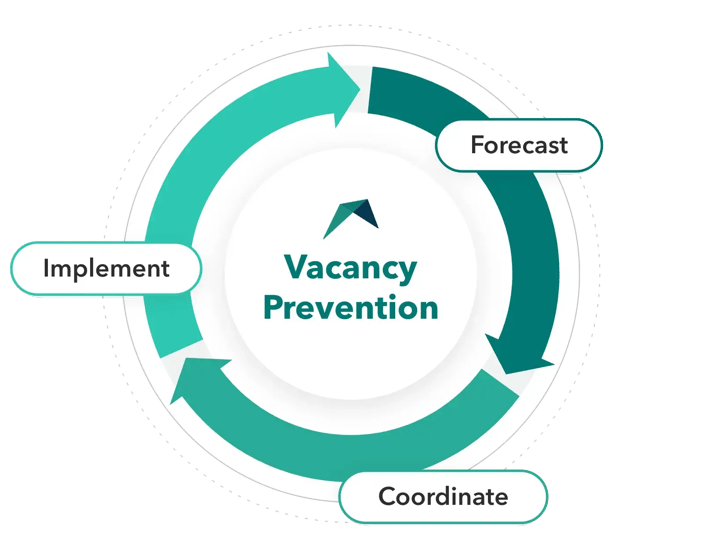
Vacancy Prevention Marketing is a methodology for forecasting upcoming availability against leasing velocity, coordinating marketing and revenue management on the same plan, and implementing those strategies before anticipated vacancies impact revenue.
It operates through a continuous, three-stage cycle:
The cycle repeats as availability and leasing velocity change, allowing teams to adjust their strategies to prevent vacancies from becoming a problem.
Preventing vacancy starts with understanding where upcoming availability may outpace leasing velocity. Upcoming availability alone doesn't determine vacancy risk; it's the relationship between availability and leasing velocity that reveals where action is needed.
Start by evaluating two factors for each floorplan over the next 30–60 days:
For example, today's occupancy report is 98%, but a two-bedroom floorplan and a one-bedroom floorplan each have eight units coming available over the next 60 days.
If the two-bedroom is leasing at a pace that points to only four leases and the one-bedroom is on track to fill all eight, only the two-bedroom has a looming vacancy problem worth addressing.
By forecasting upcoming availability and leasing velocity together at the floorplan level, operators can identify where vacancy risk exists and focus their marketing and revenue management efforts where they'll have the greatest impact.
→ How To Control Lease Expiration Timing Across A Multifamily Portfolio
Identifying future vacancy risk is only valuable if marketing and revenue management teams coordinate their response.
When teams operate in silos without communicating with one another, they may increase advertising expenses or offer unnecessary concessions for floorplans with higher leasing velocity while over-exposed floorplans aren't touched until they're a problem.
Vacancy Prevention Marketing brings both teams together around the same forecast to develop a coordinated strategy for addressing upcoming vacancies.
For example, if a two-bedroom floorplan is over-exposed, each team can take targeted action:
The goal isn't simply to spend more or lower rents, but to determine the most effective combination of strategies for each floorplan.
By coordinating marketing and revenue management, operators can drive traffic and leads where it's needed while minimizing unnecessary expenses and protecting revenue.
→ The Complete Guide to Multifamily Revenue Management
Identifying vacancy risk and developing a coordinated strategy only matter if teams act early enough to influence leasing activity. Driving traffic and leads takes time, so delaying implementation can mean missing opportunities to fill units before they become vacant.
Vacancy Prevention Marketing puts coordinated marketing and revenue management decisions into action while there's still time to prevent costly vacancies.
Depending on the strategy, implementation may include:
Implementation isn't the end of the process, as upcoming availability and leasing velocity are constantly changing.
A floorplan that needed additional advertising last week may now be leasing at a healthy pace, while another may need new attention.
That's why Vacancy Prevention Marketing is a continuous cycle: Forecast. Coordinate. Implement. Repeat.
By regularly reevaluating conditions, operators can adjust their strategies to focus resources where they're needed and pull back where they're not.
→ Why Digital Advertising for Multifamily Portfolios Requires a Different Strategy
Vacancy Prevention Marketing can be implemented by any team. For teams just getting started, completing the Forecast, Coordinate, and Implement cycle monthly may be a practical approach.
But vacancy conditions don't change on a monthly schedule.
The more frequently operators can evaluate those conditions and adjust their strategies, the more responsive their marketing and revenue management decisions can become. That is how Vacancy Prevention Marketing moves teams out of the reactive doom loop and maximizes revenue.
The challenge is that while reviewing forecasts, coordinating teams, and implementing changes is necessary, doing it manually across multiple channels takes time.
That's where RentVision's technology comes in.

Any team can run Vacancy Prevention Marketing manually. RentVision's Vacancy Prevention System runs the full cycle for you, multiple times a day, across every community and floorplan in your portfolio.
After implementing RentVision's solutions with the Vacancy Prevention Marketing methodology, a nine-community portfolio in Atlanta (PDF case study) grew total monthly rent revenue 5.5%, lifted actionable occupancy 5.4 points, and cut turnover 4.2 points in less than two years.
Ready to see your portfolio's Vacancy Exposure? Schedule a demo to see Vacancy Prevention Marketing in action.
The reactive marketing cycle is causing the multifamily industry to miss opportunities to generate demand, avoid unnecessary concessions, and protect revenue. A new approach is needed.
Vacancy Prevention Marketing is RentVision's methodology for forecasting upcoming availability against leasing velocity, coordinating marketing and revenue management on the same plan, and implementing those strategies before anticipated vacancies impact revenue.
It runs through three stages that repeat:
The faster teams are able to run through each stage, the sooner they'll be able to adjust their strategies to floorplans that need the most help, so there's not a problem to react to when the next occupancy report comes in.

 Michael Zimmerman : April 27, 2026
Learn multifamily revenue management fundamentals—from rent pricing strategies and demand-based unit pricing to tenant retention and marketing...
 Michael Zimmerman : November 19, 2024
Discover why aligning multifamily marketing with rent pricing is crucial for maximizing revenue and improving leasing performance in your apartment...
 Michael Zimmerman : September 27, 2024
Learn why multifamily revenue management goes beyond pricing and how aligning leasing, marketing, and management strategies can drive sustainable...