



When you're managing a portfolio of apartments, it's easy to get trapped into those right now moments. You need leads right now, so you increase marketing spend. You need leases right now, so you cut rents. And you're making these calls across five, ten, maybe fifteen communities all at once.
Those right now actions can lead to short-term victories: you get a ton of new leases this month, occupancies go above target, and everyone feels better.
But what are you going to do in 12 months when you've got a bunch of move-outs happening at the same time?
Without a lease expiration strategy, all of the problems you're solving right now puts your exposure at risk a year from now. To avoid this future headache, you need to map out the timing for when today's new leases will expire—and give your communities more room to handle vacancy.
What happens when you don't have a lease expiration strategy
A year after all of your short-term victories, there will come a day—maybe it's the last day of the month—where you could be facing an immediate vacancy crisis.
The U-hauls fill your parking lot, noisy dads lug mattresses and couches through the hallways, and seven residents' leases expire at once.
Do you believe you'll turn those units around quickly enough so they're ready for tours?
In a perfect world, it may take a day per unit. So, when you've got multiple leases expiring together, you're allowing units to sit vacant and unrentable for at least a week, assuming each turn is a one-day job.
The fallout on your portfolio's revenue
Even if you're able to rent one of those units every five days, the last unit of that group will have experienced 35 days of vacancy before an application is received.
Now, you've accumulated 140 total days of vacancy between when a resident moves out and an application is received for just that cluster of lease expirations.
(That doesn't even include the amount of days after application, which vary depending on both when new residents can move in and what your hold policy is. So 140 days is the best-case scenario.)
If your average rent price is $1,200/month, then that 140 days of vacancy equals $5,600 in lost rent revenue for a single community all because lease expirations were happening at the end of the month.
It's not just lost rent—it also includes the increased spending on marketing to drive traffic and leads before the next wave of expirations comes in 30 days. Compound that number across multiple properties, and the monthly losses would devastate portfolio performance.
How to fix your apartment's lease expiration timing
1. Identify future exposure risks to know best timing for expirations
The data you need to fix your lease expiration timing is already in your property management software. But when you've got multiple properties to oversee, it's easy to miss.
That's why we built the Lease Expirations tab in the RentVision Platform to make seeing your future exposure easy.
By taking into account your community's current occupancy goals, organic web traffic, and leasing data from your PMS, we can set a recommendation for how many leases should expire in a given month—and forecast those targets out for the next 18-month period.
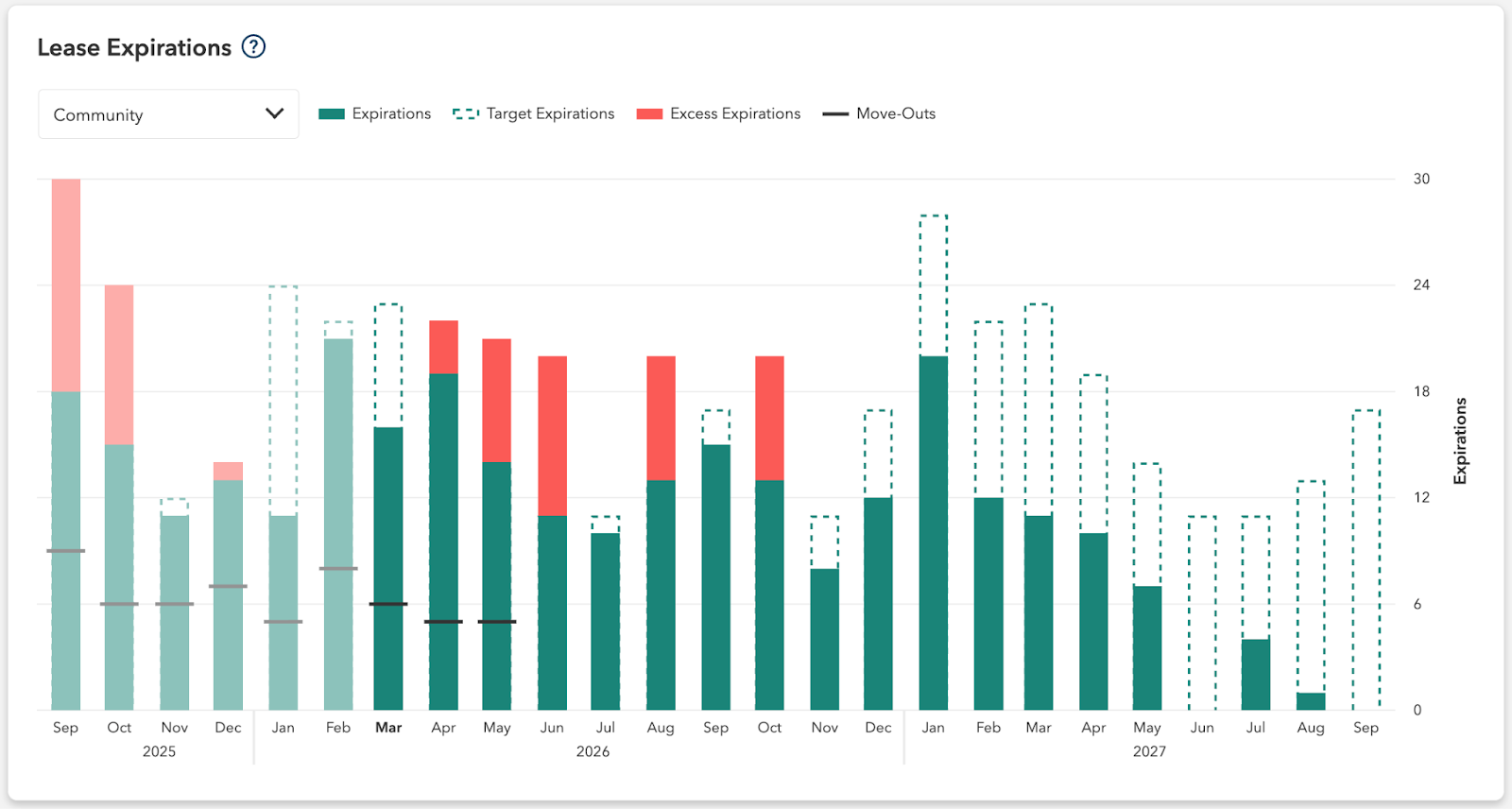
You can see exactly which months in the future where the number of lease expirations exceed the target for a given month, and where you have more room.
This information helps you avoid becoming overexposed by knowing when it's the best time to target your future expirations. It'll also help you determine which lease terms to offer in renewals.
When lease expirations are spread apart, it's easier to turn units and make them ready for tours, which speeds up leasing without having to increase marketing spend or reduce rents to get of a potential vacancy crisis.
2. Offer true 365-day lease terms
You can make a standard site-level practice to sign new residents to 365-day leases because it naturally spaces out when varying units go vacant.
When you have just one unit moving out at any time rather than a bunch of units vacating on a single day, you're giving your maintenance team breathing room to be able to turn it over and make it available for showings faster while also eliminating any unnecessary days of vacancy.
3. Have all leases expire on a Sunday
Taking the 365-day leases a step further, you can make it a standard for leases to expire on Sundays.
Sundays work for both you and your residents.
On the resident side, it allows them to plan and conduct their move-outs over the weekend rather than in the middle of the week. That's a considerate gesture—especially if they may need friends or family to help and they don't need to take any PTO from work.
For you, it gives you greater control over the timing of your future move-outs. You can look at the forecast of your future lease expirations and select the first or last Sunday of a month where you have more room, tactfully avoiding a month where you're overexposed.
This tactic may produce 11½ or 12½ month leases—not a true 365-day stay. However, you'll hardly hear an objection from the resident at lease signing—they're often more focused on when they can move-in, not the exact date they'll move-out.
The other benefit of having leases expire on Sundays is that it avoids two extra days of vacancy on weekends when your turnover teams are unavailable. They can attack the vacant unit first thing on Monday morning, getting them ready for showings faster.
Conclusion: A lease expiration strategy is a portfolio-level revenue decision
When lease expirations are timed right across your portfolio, the benefits follow naturally.
You turn units faster. You stop bleeding money on concessions. You can dial back marketing spending without the fear of vacancy creeping up.
But most importantly, you avoid repeatable vacancy crises across your portfolio. Having a systematic approach for timing out lease expirations gets you past making the right now, reactive marketing and pricing decisions on repeat.