

How to Make Floorplan Pages the Conversion Engine of Your Apartment Website
Great floorplan pages are purpose-built destinations—designed to show renters if your apartments match their lifestyle, budget, and needs. Here’s how...
RentVision was born out of a property management company. Read our story and learn why our solutions are the right fit for your portfolio, and how you can join our mission to make renting apartments easy.
Explore our marketing and pricing solutions and build your vacancy prevention system, or start with one that will help you today. Each solution works ahead of your upcoming exposure, so you can stop reacting.
Resources for portfolio leaders who own marketing, pricing, or occupancy. Read playbooks and guides, or subscribe to The Multifamily Marketer for insights on preventing vacancy.
2 min read
Michael Zimmerman
:
Published
Updated
With all the focus on AI these days, it’s easy to overlook some of the SEO basics for apartment websites.
Headers, page titles, meta descriptions, alt text...
“Yeah, those mattered 10 years ago, right?!”
Well, the more things change, the more they stay the same—because those on-page elements are still how search engines and AI tools understand the content and structure of your site.
Skip them, and you risk losing online visibility and rankings.
Let's break down each of these SEO elements—and how to apply them to your apartment website.
Headers help both renters and search engines scan your content—and understand what's most important.
Each page should have a clear heading hierarchy:
No, that's not just various headlines of differing font sizes—headers are labels assigned within the website's code to help search and AI algorithms understand where sections on the page begin and end.
Since they're used by web crawlers to understand a site's content, headers are a valuable place to use relevant keywords that match renter queries (i.e. "Pet-Friendly Apartments in Downtown Houston" or "Voted Top Luxury Apartment Community in Knoxville").
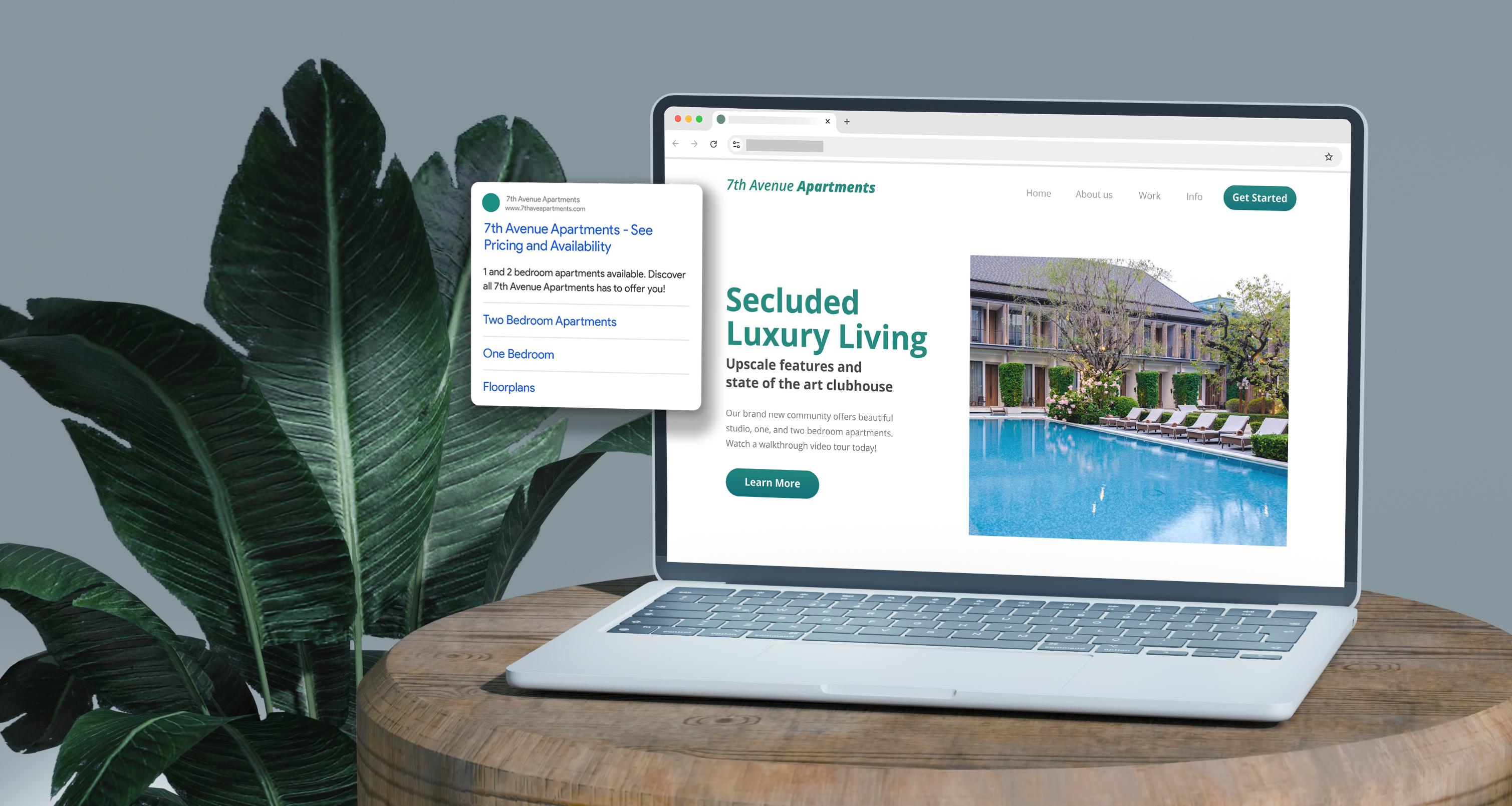
Page titles appear in the browser tab and often as the blue clickable link in Google search results—so they carry a lot of SEO weight.
A page title like “Soho Floorplan” isn’t enough. It lacks context and keywords renters actually search for.
Instead, it should have location- and intent-driven language, like:
“Soho Floorplan (Studio) | Great Lakes Apartments in Detroit, Michigan”
This helps renters and search engines clearly understand what the website pages is about—and improves ranking capability by including valuable search terms like “1-bedroom,” “studio floorplan,” and “apartments in Detroit, Michigan.”
Meta descriptions don’t appear directly on your website, but they show up underneath page titles in Google search—and are often used by AI tools to summarize your site’s content.
Each page (especially floorplan pages) should have a unique meta description that reflects what’s on that page. This helps improve click-through rates and AI visibility.
For example, a floorplan's on-page description might briefly highlight:
Alternative text (alt text) is used to describe the content of images and videos. While not visible on the page, it plays a critical role in SEO and website accessibility.
Alt text serves three distinct purposes:
Think of alt text like a caption. What's shown in the photo? Where is the photo taken? What, if someone couldn't 'see' the photo, would help them truly understand it?
That's why alternative text like 'kitchen photo' isn't enough for apartment websites; it should be more like:
"Kitchen in the Soho 1-studio bedroom floorplan, next to entryway,
with white granite countertops, and stainless steel oven, microwave, and refrigerator."
High-converting apartment websites include page titles, meta descriptions, headers, and alternative text optimized for better online visibility and rankings.
These SEO elements may seem small—but as search continues to evolve, their impact will become much more important. Ensure you're using them effectively, as that'll help both search engines and AI tools understand the content and structure of each page of your website.
They're also foundational features of RentVision's Community Websites. Want to improve your website's rankings and visibility? Schedule a demo to see how we do it.
About the author
Michael Zimmerman is the Lead Content Writer behind The Multifamily Marketer, RentVision’s resource hub and LinkedIn newsletter for marketing and revenue leaders at large portfolios. Since 2020, he has written educational content about multifamily digital advertising, apartment websites, rent pricing strategies, and vacancy prevention.
Great floorplan pages are purpose-built destinations—designed to show renters if your apartments match their lifestyle, budget, and needs. Here’s how...
Discover the 4 essential pages every apartment website needs to attract, qualify, and convert renters—plus bonus page ideas that support SEO and...
Looking for a new apartment website vendor? Learn what features and questions to prioritize—like SEO, mobile design, and PMS integration—to choose a...