
 Michael Zimmerman
RentVision featured on Modern Multifamily Podcast
 Michael Zimmerman : May 31, 2023
RentVision 's David Watson was interviewed by Mike Wolber of the Modern Multifamily Podcast. Hear the interview and read highlights from their...

In 2024, an underperforming apartment community in Baltimore launched RentVision's Vacancy Prevention System—Predictive Advertising, a Community Website, and Revenue Management working together—which quickly rescued its occupancy and revenue.
But that's just the first act of the story.
Most multifamily marketing vendors can "fix" a struggling community fast by throwing more money at ads, refreshing the website, or slashing rents until something moves. Occupancy spikes, both sides are happy, and the case study gets written.
But what happens after the turnaround? Did the early success last, or fizzle out? That's the part that usually goes unanswered, yet it's what portfolio operators should weigh most.
To address that, we'll share what happened immediately after the community launched with RentVision, and provide a look at where things stand today, two years in.
On September 4th, 2024, occupancy bottomed out at 85.6%—nearly 5 points below the Baltimore market.
Ironically, the 139-unit, Class B property wasn't struggling by being under-marketed. The real problem was that its units were overpriced relative to demand, and its future exposure was more at risk.
Relying heavily on ILSs kept traffic steady, but as occupancy continued to fall, so too did any confidence in getting a positive return on investment.
Things needed to change.
What the community was facing was the exact type of situation our Vacancy Prevention System is designed to read and resolve.
With upcoming exposure looking bleak, Predictive Advertising drove demand exactly when and where it was needed. Its RentVision Community Website directed that traffic to the floorplans needing the most help. RentVision Revenue Management followed the same first-party demand signals from the community's PMS, plus website data, to optimize rents reflecting what renters would actually pay.
They weren't just bolt-on solutions independently addressing the community's needs—their ads, the website, and pricing were working together as a coordinated Vacancy Prevention System designed to both quickly improve and then sustain performance.
RentVision Revenue Management identified most units were overpriced relative to demand, then incrementally lowered market rents between August and February to correct the course.
The strategy paid off: occupancy steadily improved, and average market rents not only recovered from, but surpassed, previous levels—reaching $1,907/month in July 2025, a 3% year-over-year increase.
Gross Potential Rent rose 10.1% from February to June 2025, indicating that the early strategy of lowering rents to boost occupancy was the right move for sustaining long-term revenue growth.
At launch, the community's ad budget went up to $45/day as Predictive Advertising immediately went to work, allocating that amount across Google and Meta Ads to drive qualified traffic.
With help from that early push, the website peaked at 3,796 visits in October 2024—precisely when support was most needed to correct an occupancy crisis and weather the slower season.
As occupancy increased, Predictive Advertising automatically lowered the daily budget, saving $4,178.85 in unnecessary ad spend after 10 months.
The success of Predictive Advertising combined with their new RentVision Community Website, the community's marketing team was able to cancel their ILS contracts.
The combination of these owned marketing channels, plus Google Business Profile, resulted in 174 phone call leads between launch and July 2025, including a peak of 29 in January—one of the slowest times of year.
Did the rescue actually work? In the first 10 months after adding RentVision's services, occupancy increased by 11.5 points, monthly rent revenue grew by $22,000, and Gross Potential Rent increased 10%—all while saving over $4,000 in unnecessary ad spend through automated budget adjustments aligned with future leasing demand.
That's a turnaround we're proud of. But the real test is what happened after.
Yes! The apartment community has become a sustainable high-occupancy, high revenue success story since RentVision's Vacancy Prevention System launched 22 months ago.
Here's where things stand as of May 2026:
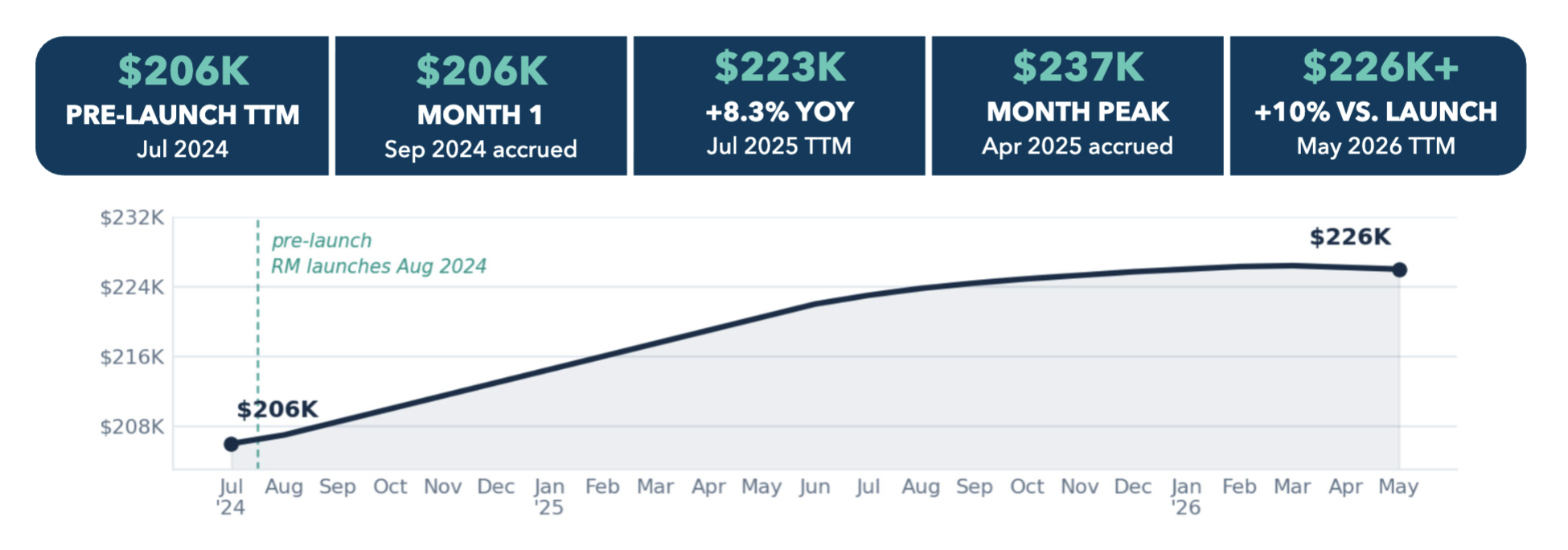
Average monthly paying rent grew from $1,740 to $1,787 (+$47/unit per month). Pre-launch TTM in July 2024 was $206K. After the first year, that number improved to $223K. 22 months later, it's $226k.
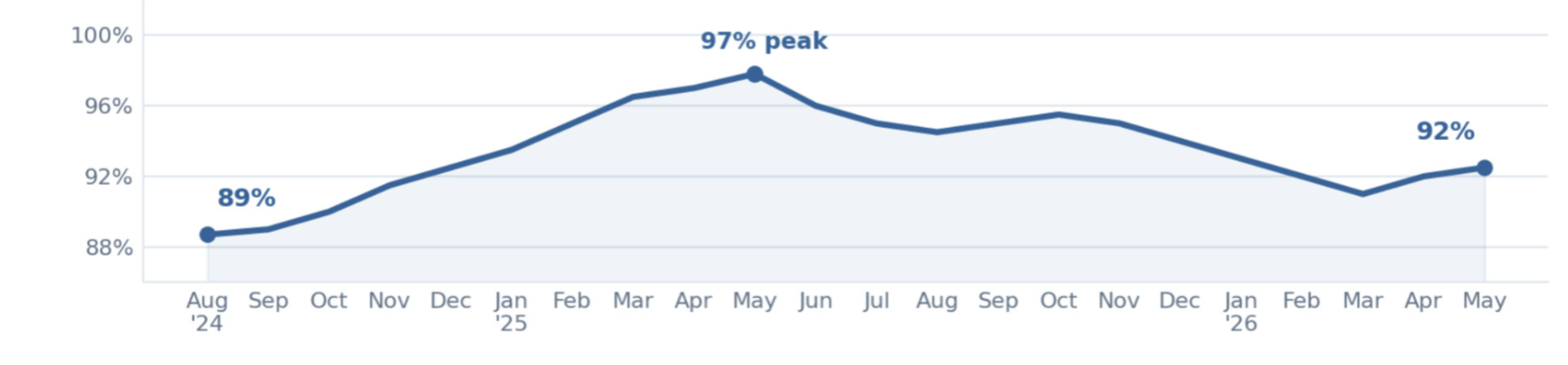
Revenue grew without the building emptying, as occupancy stabilized in the 90s.
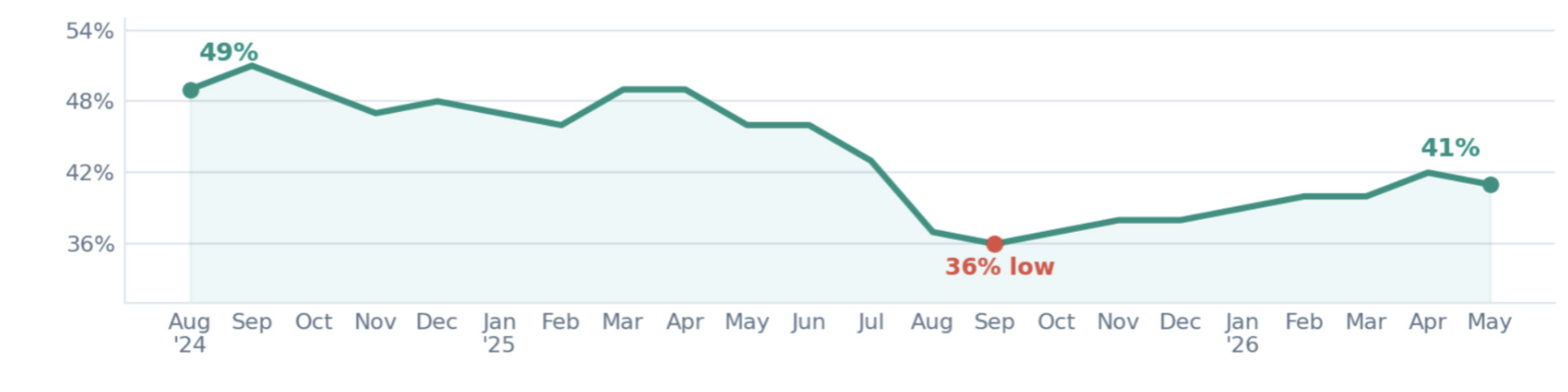
And it's still falling—every month in the last year has beat the year prior.
That's roughly double what the community's savings were with Predictive Advertising after the first 10 months. Ad spending only followed upcoming exposure, dropping 70% when demand peaked in Spring 2025 while ramping up ahead of expirations in the Fall. Over 22 months, that led to:
ILSs still aren't needed to move the needle for this community. Its website, with floorplan-specific RentVision Virtual Tours included, is converting qualified traffic coming in from Predictive Ads and GBP.
The numbers prove that our Vacancy Prevention System of Predictive Advertising, Community Websites and RentVision Revenue Management does more than just quickly turn things around; they're designed to sustain success. Ready to bring your communities on board? Schedule a demo to get started.

 Michael Zimmerman : May 31, 2023
RentVision 's David Watson was interviewed by Mike Wolber of the Modern Multifamily Podcast. Hear the interview and read highlights from their...
 Michael Zimmerman : August 4, 2021
RentVision Founder and CEO, David Watson, discusses predictive advertising on the Beyond Rent: Exploring Property Management podcast by RentManager.
 Michael Zimmerman : April 17, 2023
Listen to RentVision founder and CEO David Watson discuss multifamily marketing services in an interview on the Pathmonk Presents podcast.